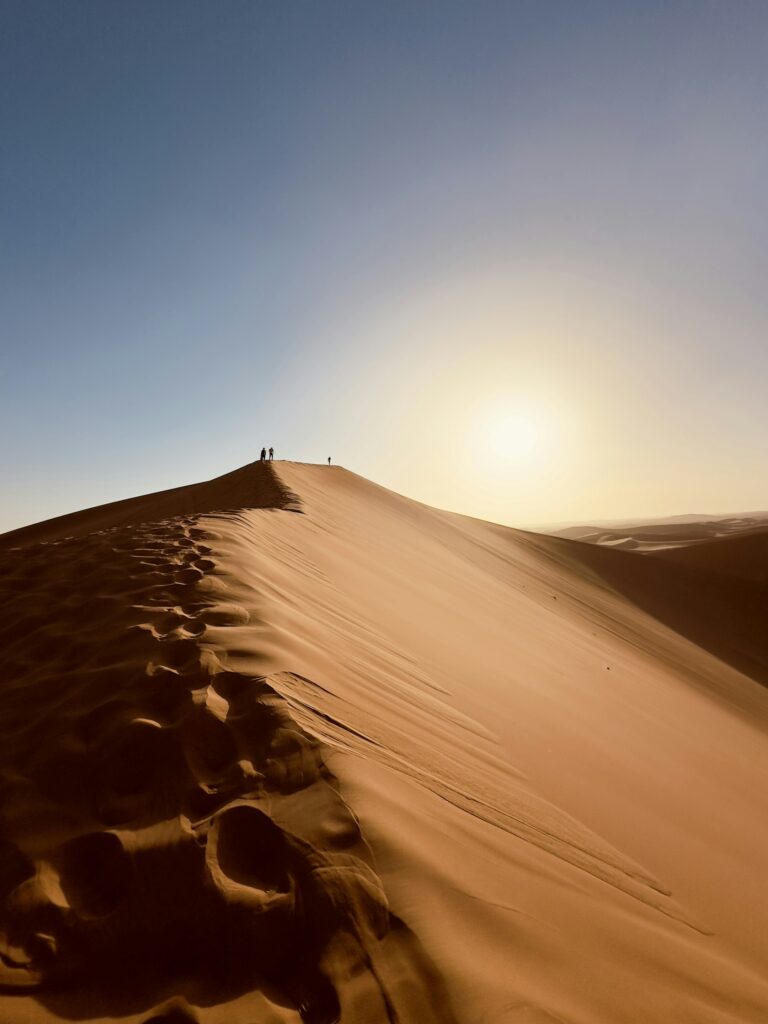
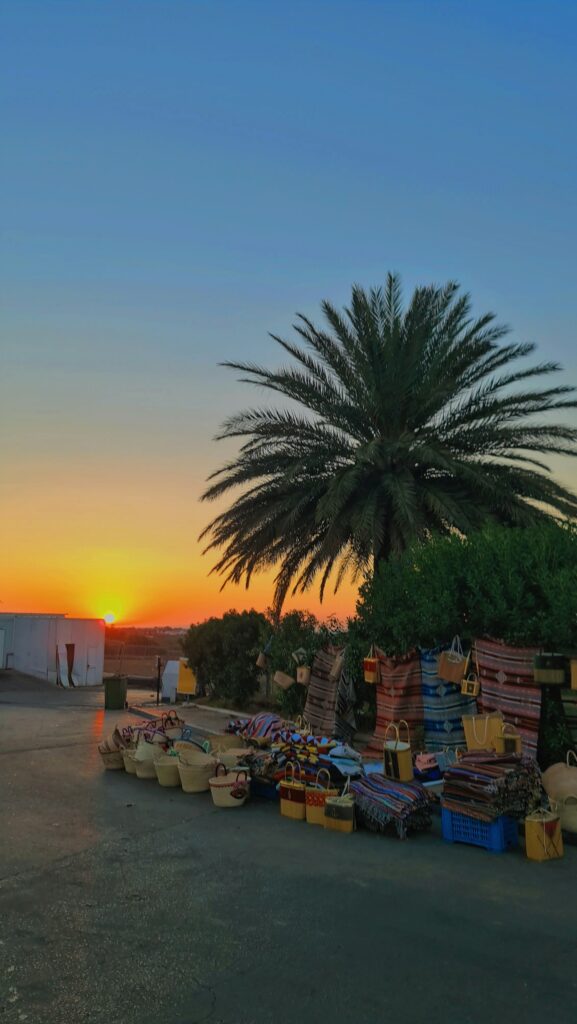
There is a particular silence in the desert. It is not empty; it is full. The wind moves the sand, a bird calls once across the dunes, and then there is only your breath. For many people, practising yoga and meditation in the Sahara is the first time they truly hear themselves. If you are considering a desert retreat in Tunisia, this guide will help you understand what to expect and how to prepare.
Why the desert changes your practice
At home, practice often happens in the gaps between everything else. In the desert, there are no gaps to fill. The landscape is vast and simple, the light changes slowly through the day, and the usual distractions fall away. Many people notice that their breathing deepens, their sleep improves and their thoughts become quieter within a day or two.
The desert also has a long spiritual history. Across traditions, people have gone into the wilderness to pray, fast and listen. You do not need to follow any tradition to feel why: the desert simply makes space.
Two faces of Tunisia: the sea and the Sahara
Tunisia is small enough to travel from the Mediterranean to the Sahara within one journey, and that contrast is part of its magic. In the north, Sidi Bou Said, the white-and-blue village above the Gulf of Tunis, is a gentle place to arrive. In the south, the oasis town of Tozeur is surrounded by palm groves, and beyond it the Chott el Jerid salt lake and the dunes of the Sahara stretch away.
Starting by the sea and travelling into the desert mirrors the inner journey of a retreat: first you arrive and soften, then you go deeper.
What a desert retreat day can include
Every retreat has its own rhythm, but a day in the desert often weaves together:
- Morning practice of yoga, breathwork or meditation, often outdoors while the air is still cool.
- Walking in the dunes or through an oasis, sometimes in silence.
- Rest during the warmest hours, with time to read, journal or simply do nothing.
- Sunset, which in the desert is an event in itself.
- Evenings of music around a fire, followed by a sky full of stars.
When to go
Spring and autumn are generally the most comfortable seasons in the Tunisian desert, with warm days and cool nights. Summer in the south can be extremely hot. Winter days are often pleasant, but nights in the desert can be cold, sometimes close to freezing, so it is worth checking the season and packing accordingly.
What to pack
- Light, loose clothing that covers your shoulders and legs, which is both respectful and protective from the sun.
- Warm layers for the evening: a fleece or wool jumper, and a hat for cold nights.
- A wide-brimmed sun hat, sunglasses, high-factor sunscreen and lip balm.
- A scarf or light shawl, useful against wind and sand and when visiting religious sites.
- Comfortable closed shoes for walking, plus sandals.
- A refillable water bottle. Drink more than you think you need.
- A journal. The desert tends to bring up things worth writing down.
- A small torch or head torch for the camp at night.
Looking after yourself
The desert is gentle when you respect it. Stay hydrated, rest in the hottest part of the day and listen to your body during practice. If you have health conditions, tell your retreat organiser in advance so they can advise you. Emotionally, it is also normal for feelings to surface in such open space; a good retreat leaves time for rest and integration.
Our desert retreats in Tunisia
We offer two journeys that bring the sea and the desert together. Oasis of Lights is a six-day yoga and mindfulness journey that begins in Sidi Bou Said and continues to a desert camp, with yoga, meditation, Energetic Body Realignment, desert walks and music. It welcomes people with different levels of experience.
The Desert and Sea Reset Retreat spends three nights at Diar Abou Habibi near Tozeur and two nights in Sidi Bou Said, with guided meditation, gentle yoga, breathwork, Asha meditation and musical healing evenings. It includes preparation before you arrive and an online integration call after you return home.
See all our yoga and meditation retreats in Tunisia, or answer a few questions in our Find Your Retreat questionnaire and we will help you choose.
Frequently asked questions
When is the best time for a desert yoga retreat in Tunisia?
Spring and autumn usually offer warm days and cool nights. Summer in the south can be extremely hot, and winter nights in the desert can be close to freezing.
Do I need yoga experience?
Not for our Tunisian journeys: Oasis of Lights welcomes people with different levels of experience, and the yoga on the Desert and Sea Reset is gentle.
What should I wear in the desert?
Light, loose clothes that cover shoulders and legs during the day, warm layers for the evening, a sun hat and comfortable closed shoes.